Oriental Rugs Dictionary
Mahal
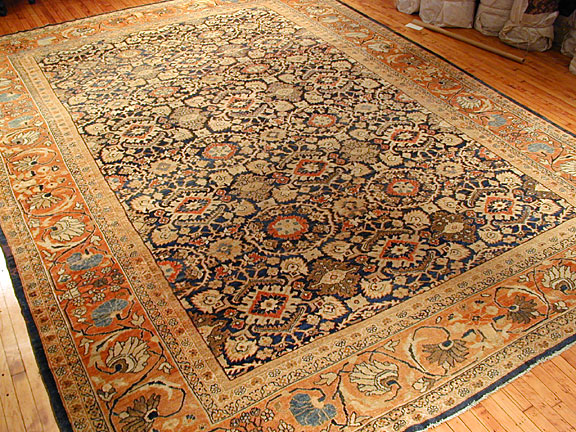
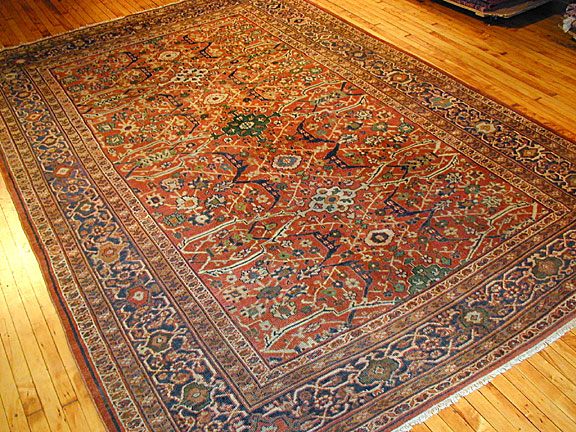
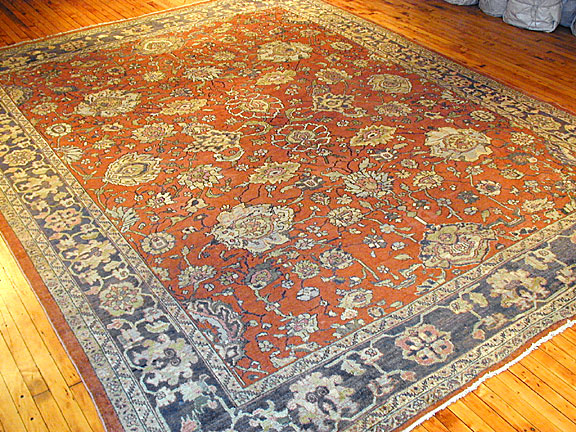
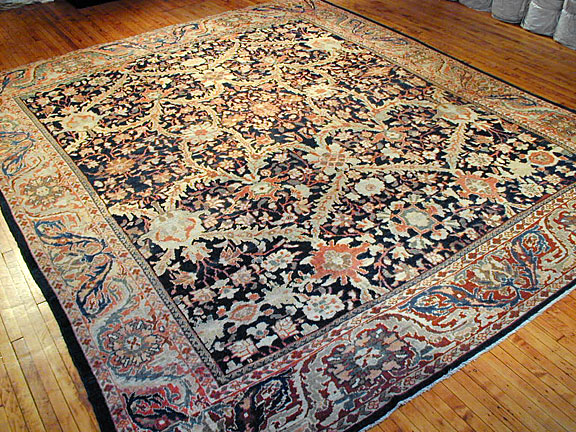
Mahal rugs are Persian village carpets woven in the Mahal region of central Iran, near Arak.
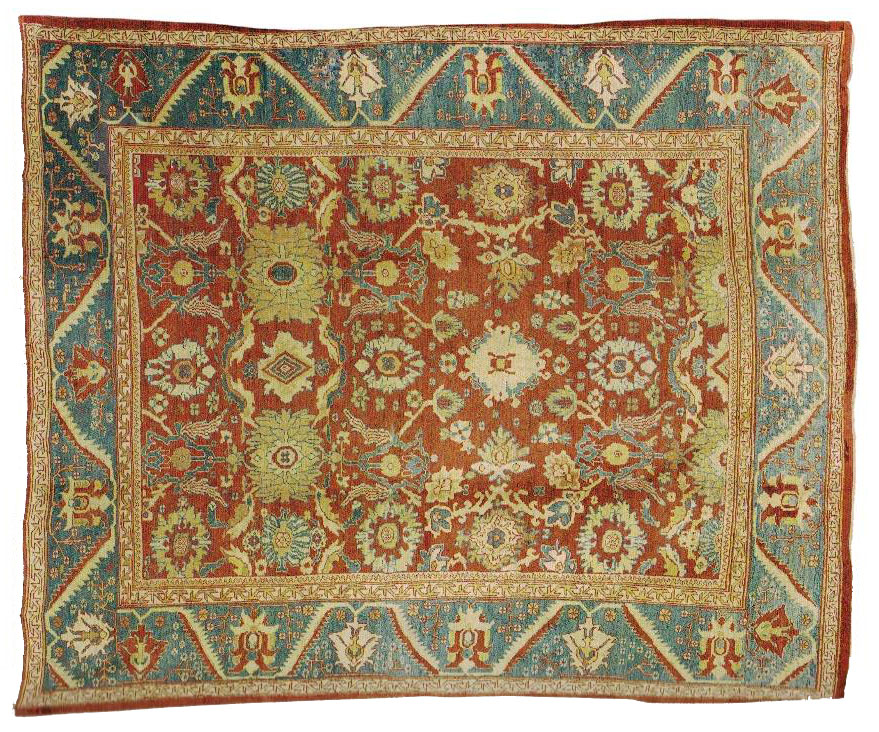
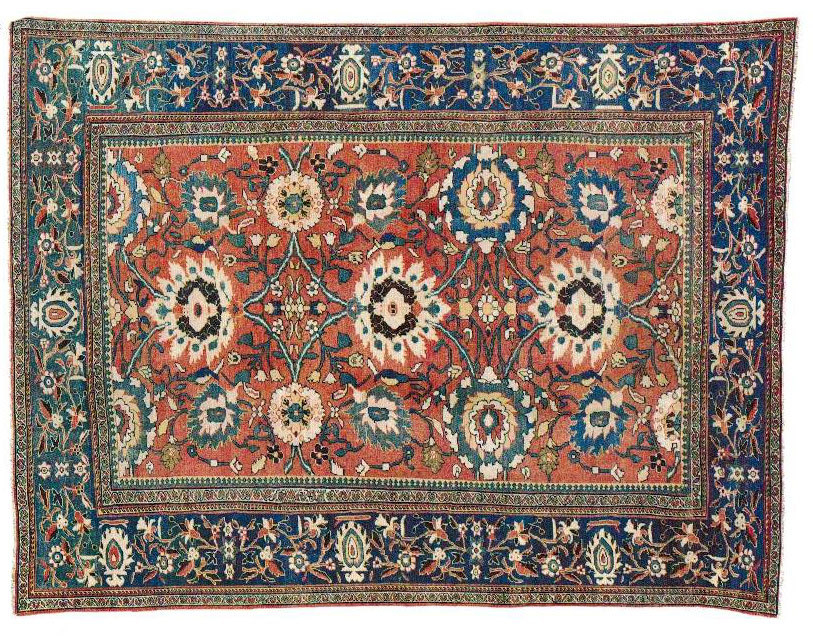
These carpets are known for their large-scale floral patterns, open designs, and soft color palettes, often influenced by classical Persian motifs.
Mahal rugs became popular in the late 19th and early 20th centuries, especially for export markets.
In an unusual manner the term Mahal is does not refer to a village or province, but most probably it refers to Mahallat, a village located on the southern part of Arak region. Possibly, at some time in the past, loosely woven carpets with a floppy handle and cotton foundations were produced in and around this village. Although Mahal carpets are of average quality, it is worth remembering that the price of a carpet is not determined by its knot count and that color and design are of greater significance.
Many Mahal carpets are with all-over scrolling vines and large palmettes designs. A pattern influenced by the Shah Abbas period carpets and often even called so. The design has proved such an enduring success that it is still copied by many reproduction carpet dealers today.
Current trends, particularly among interior designers, for carpets with all-over designs have recently boosted the price for all Mahals. As the weavers of these carpets used soft, lustrous wool for the pile, Mahals are not as durable as might be expected. However, low or worn areas are easy to restore, as the Mahal weave is relatively coarse.
For Mahal rugs in our inventory click here