Oriental Rugs Dictionary
Lady and the Unicorn
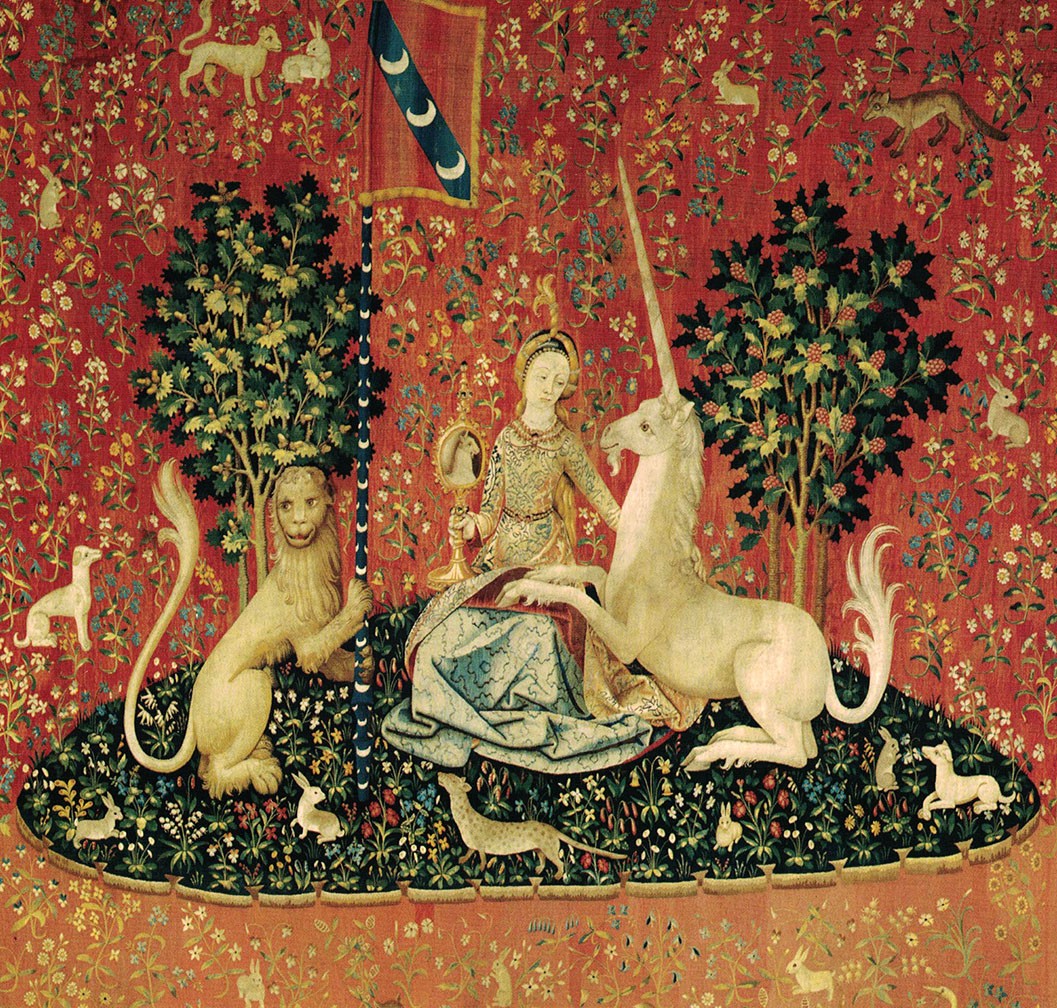
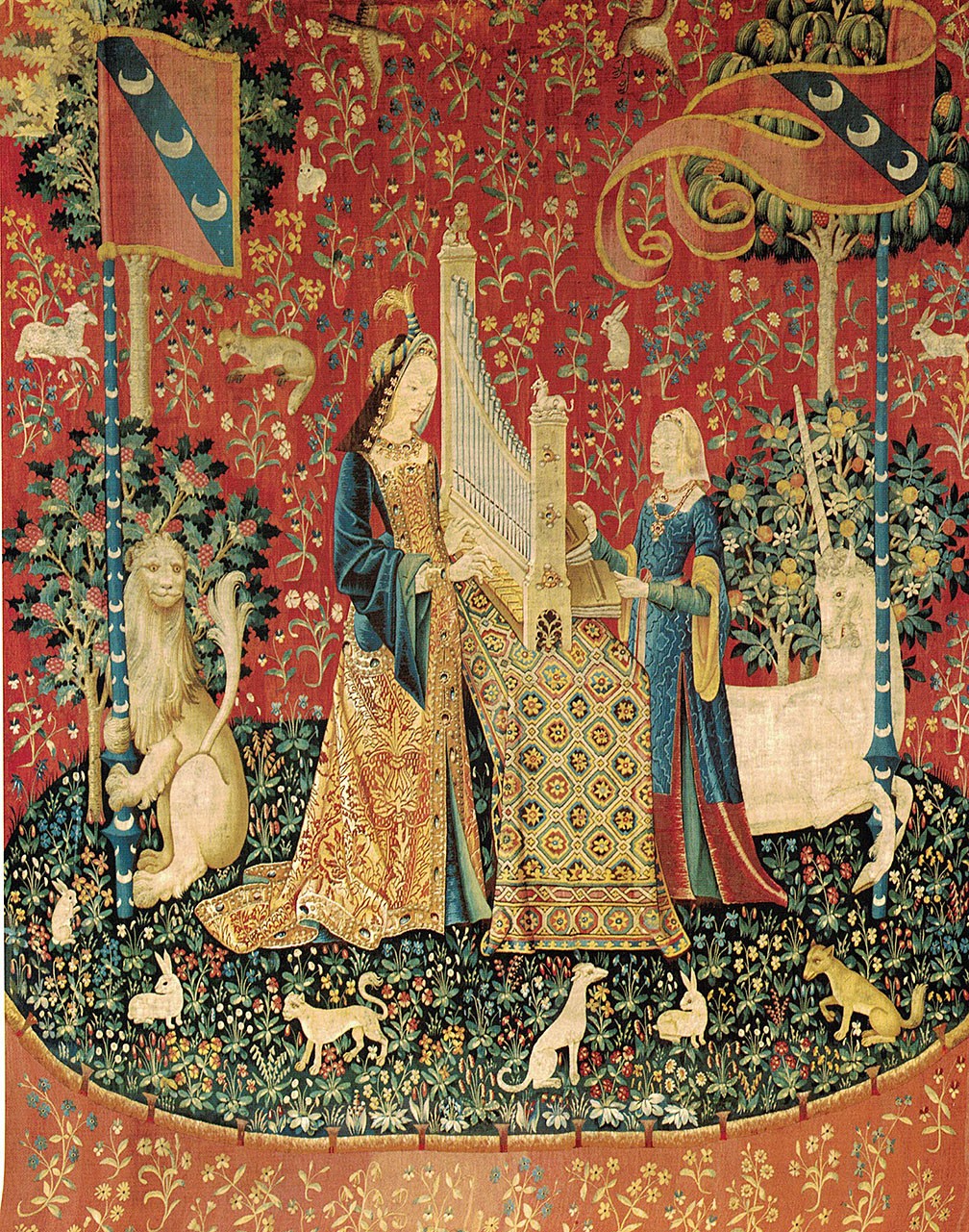
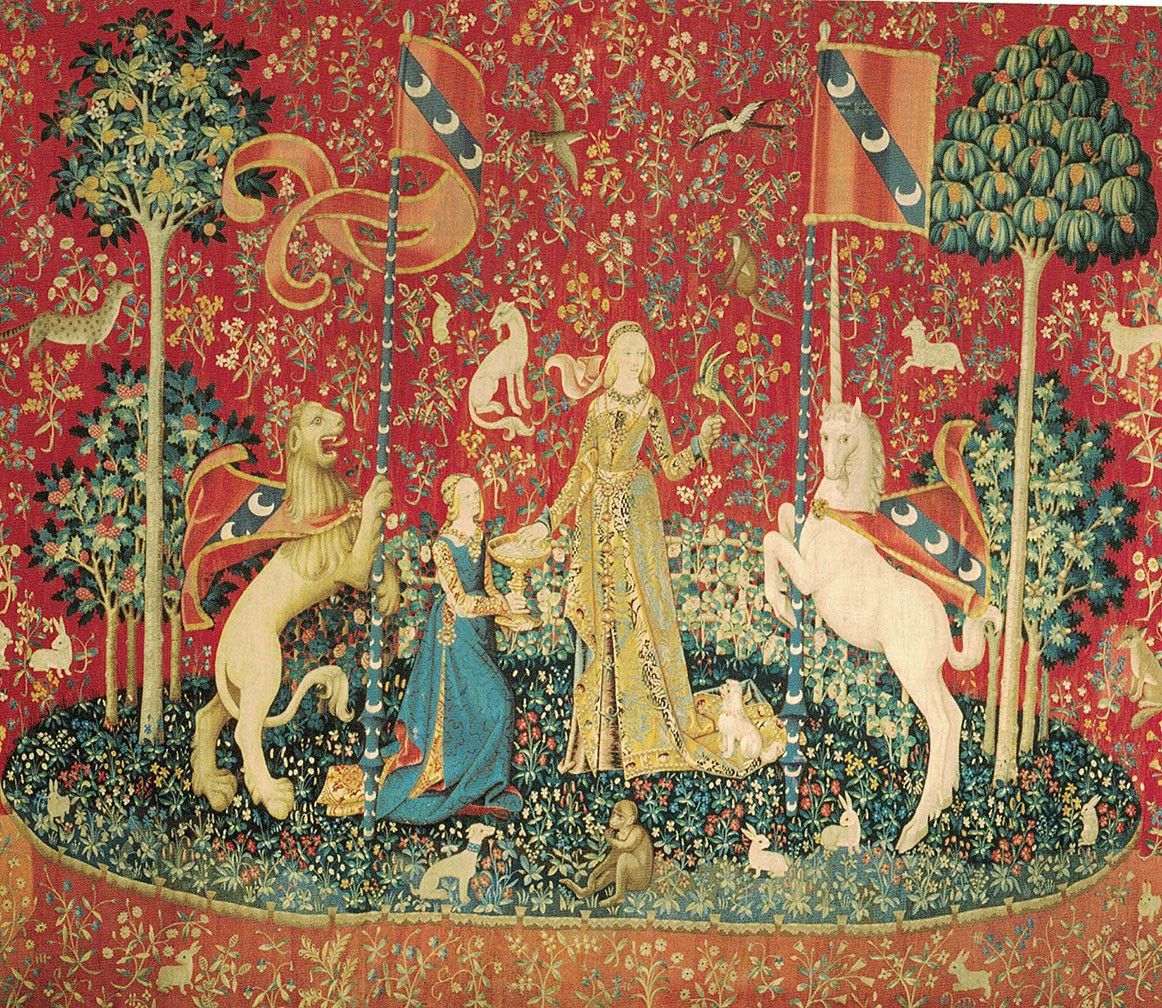
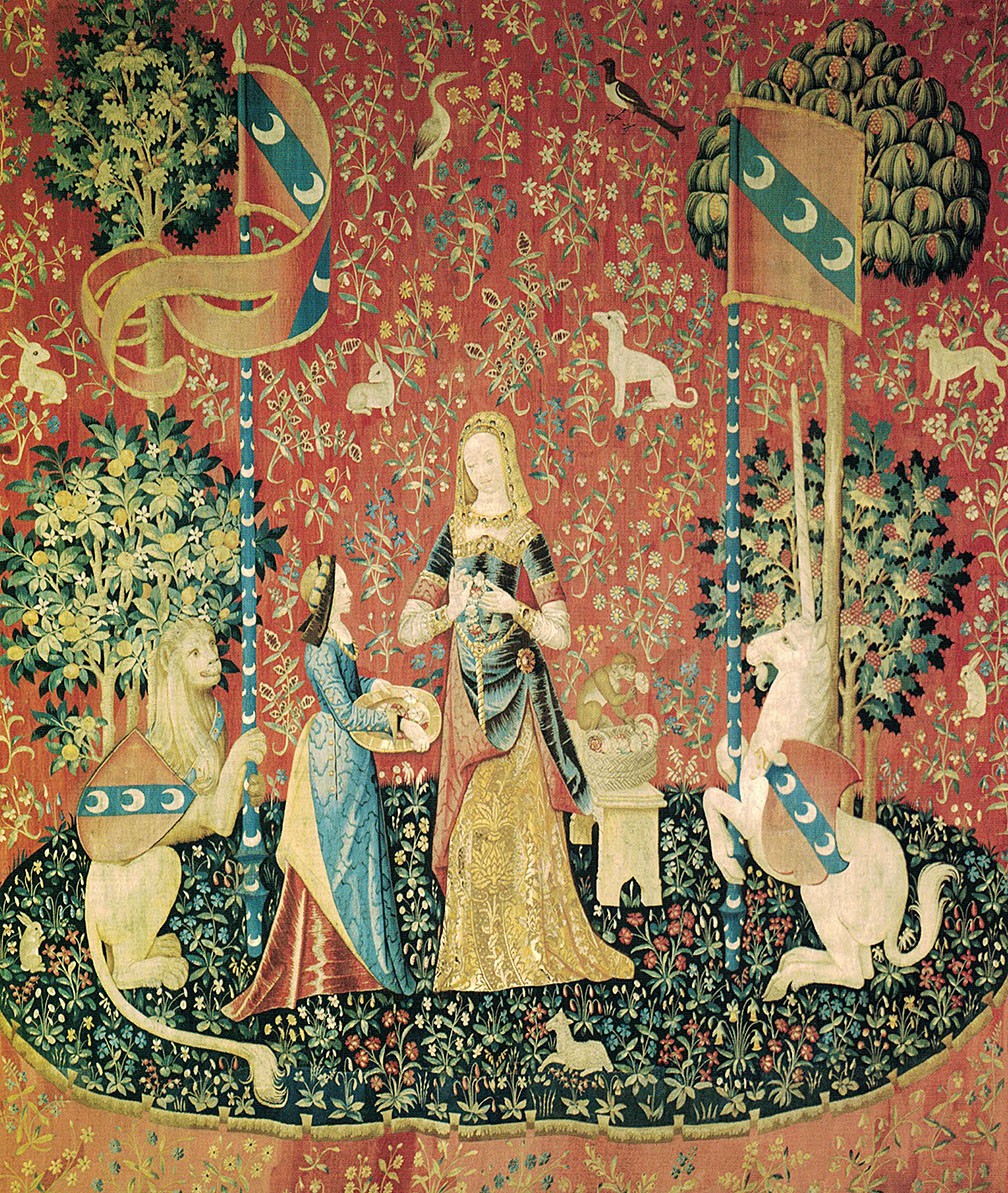
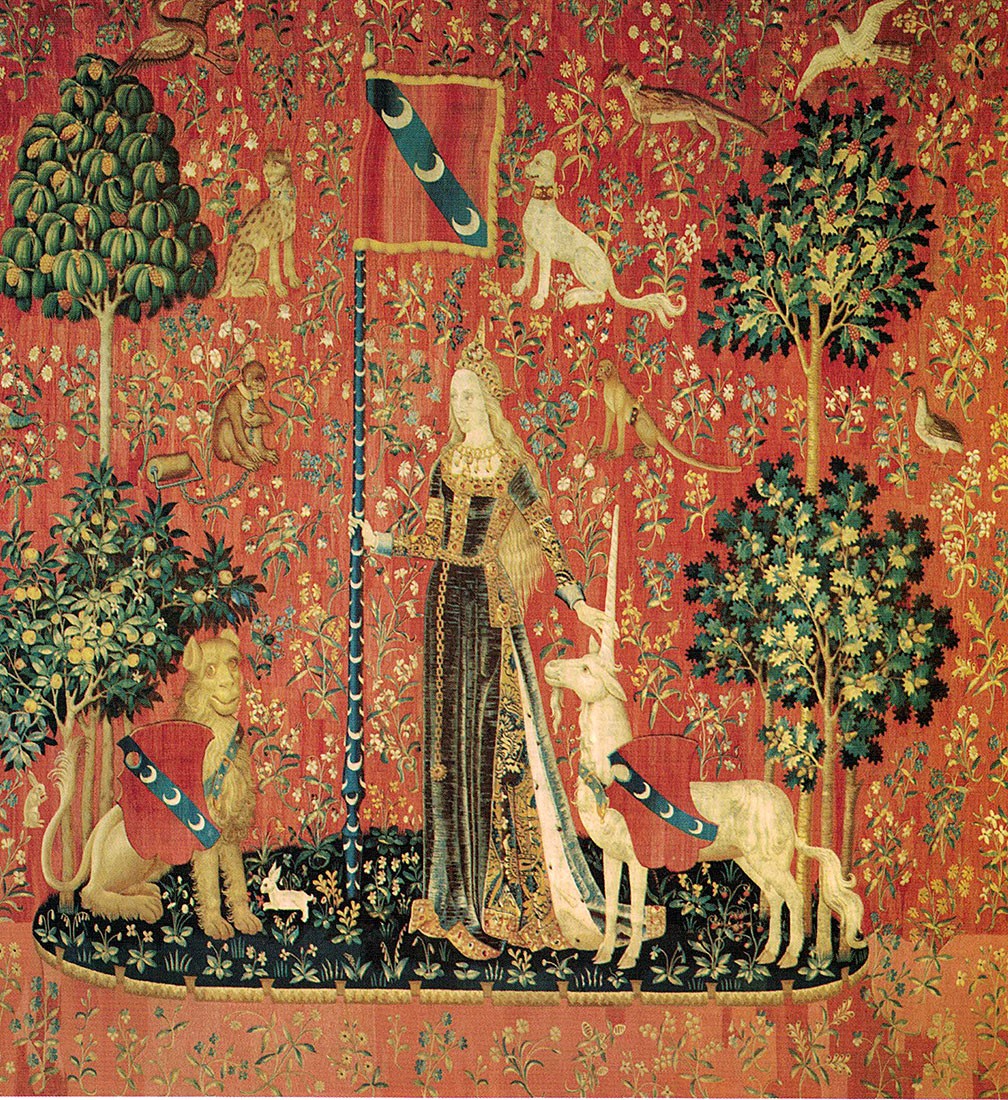
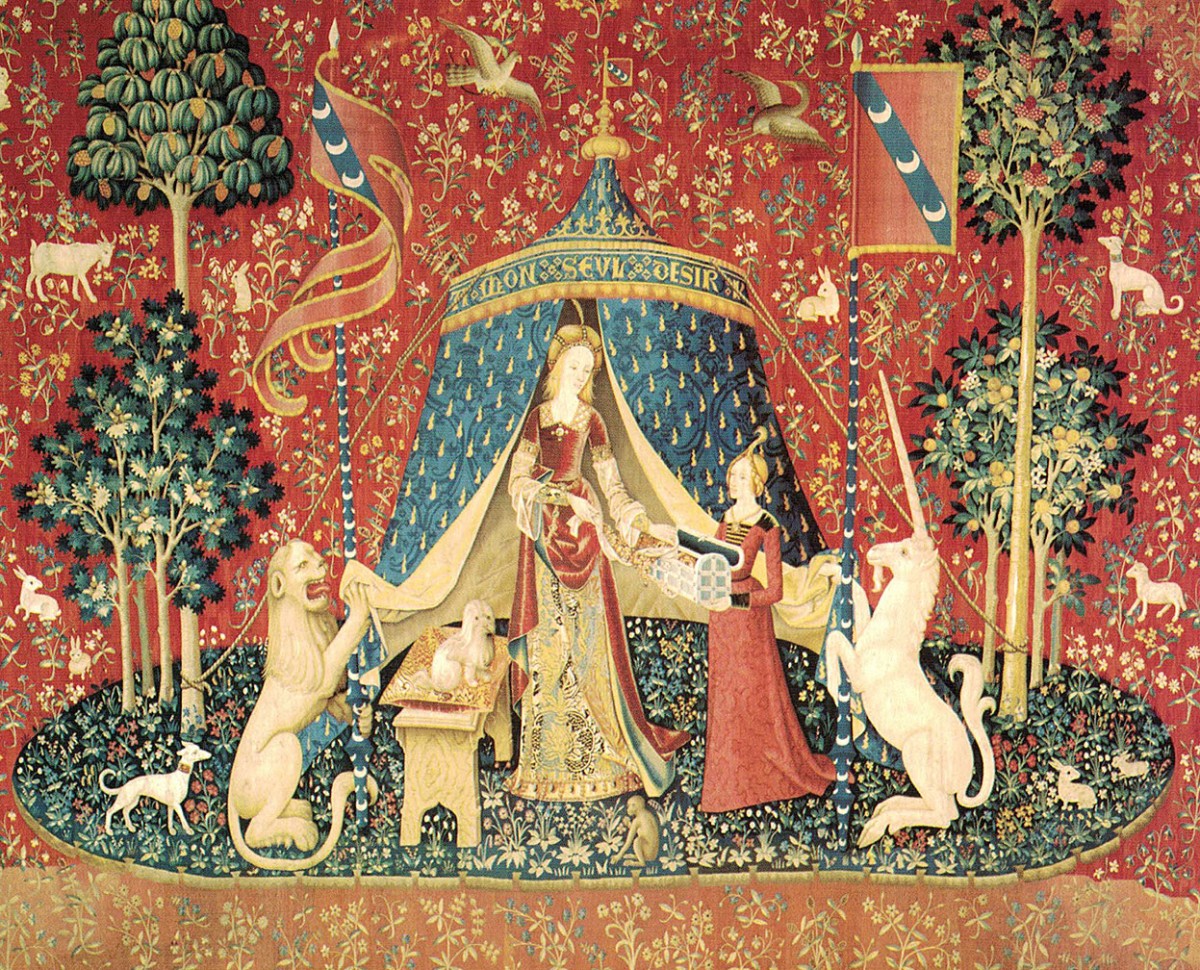
The Lady and the Unicorn is a famous set of six medieval tapestries housed in the Musée de Cluny in Paris. These tapestries date from the late 15th century and depict allegorical scenes representing the five senses and a sixth symbolic theme. They are among the most celebrated examples of European tapestry art. Although not carpets, they are important for understanding the broader development of textile design in Europe. The Lady and the Unicorn (French: La Dame à la licorne) is the modern title given to a series of six tapestries created in the style of mille-fleurs (meaning: "thousand flowers") and woven in Flanders from wool and silk, from designs ("cartoons") drawn in Paris around 1500.[1] The set, on display in the Musée de Cluny in Paris, is often considered one of the greatest works of art of the Middle Ages in Europe. Five of the tapestries are commonly interpreted as depicting the five senses – taste, hearing, sight, smell, and touch. The sixth displays the words "À mon seul désir". The tapestry's meaning is obscure, but has been interpreted as representing love or understanding. Each of the six tapestries depicts a noble lady with the unicorn on her left and a lion on her right; some include a monkey in the scene.