Oriental Rugs Dictionary
Ikat
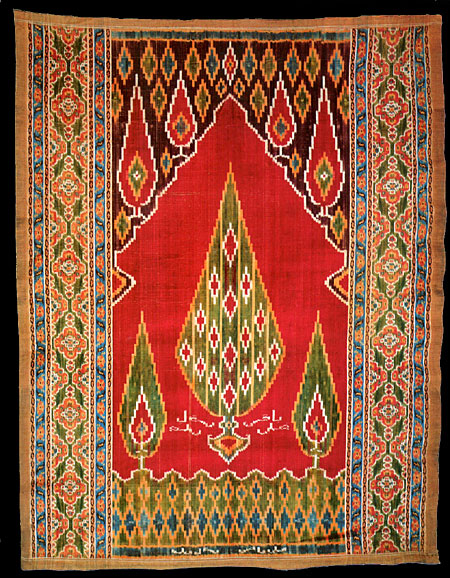
Ikat is a textile-making technique in which yarns are resist-dyed before weaving to create patterns.
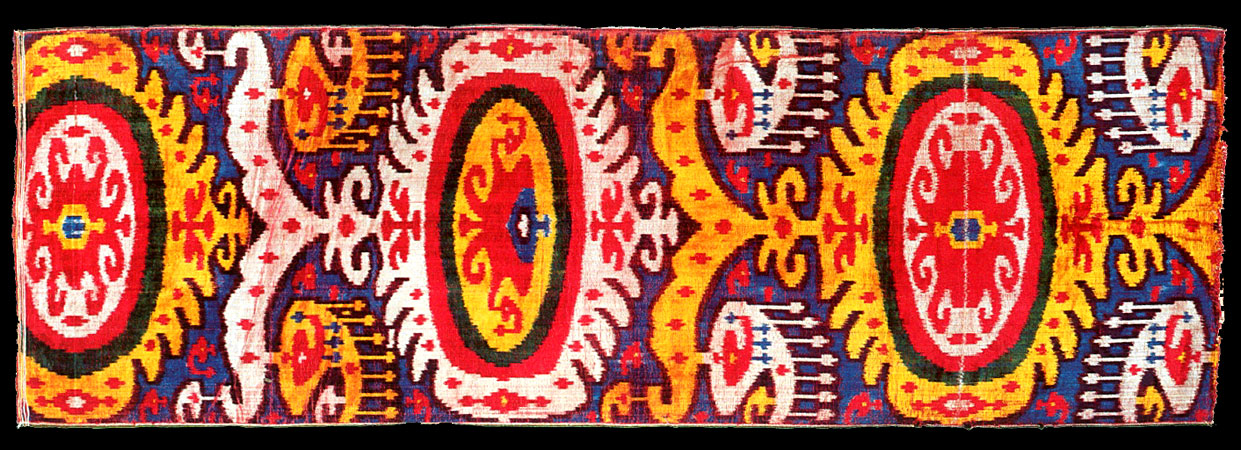
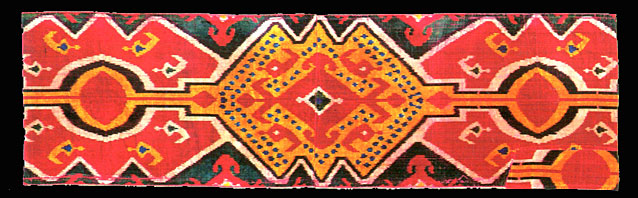
In this process, sections of the yarn are tightly bound before dyeing so that the dye does not penetrate those areas. When the yarn is later woven, the pre-dyed sections form intricate patterns with a characteristic slightly blurred or feathered appearance.
Ikat textiles are produced in many regions, including Central Asia, India, and Southeast Asia, and are valued for their complex and labor-intensive production method.
A process in which fabric designs ae created by tie dyeing warps and/or wefts before they are used in the loom. A fabric produced in this manner.
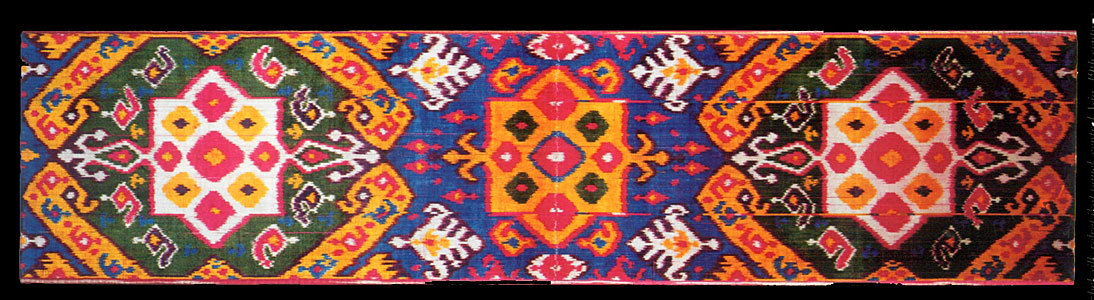
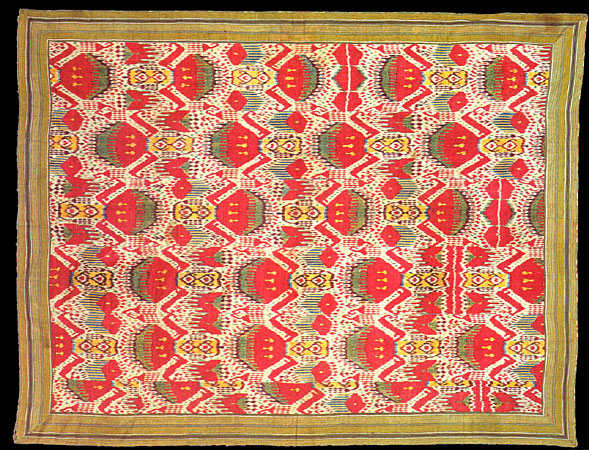
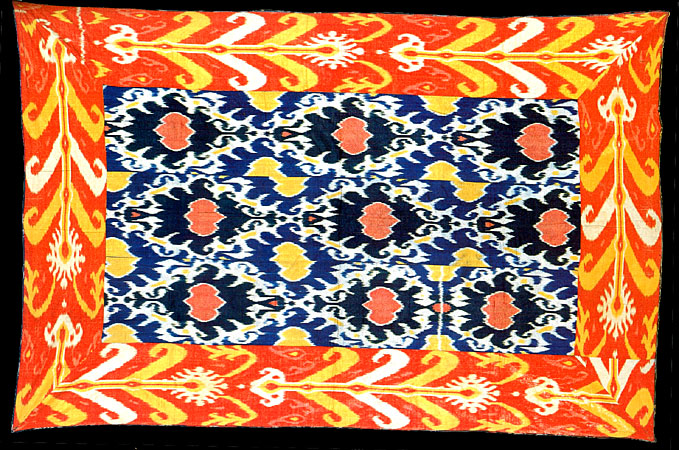
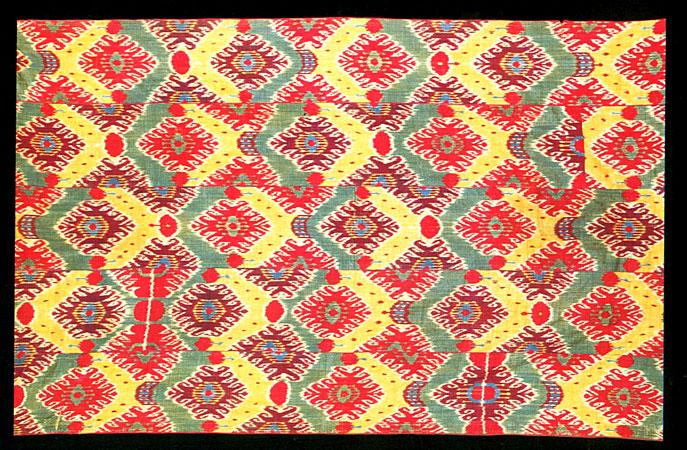
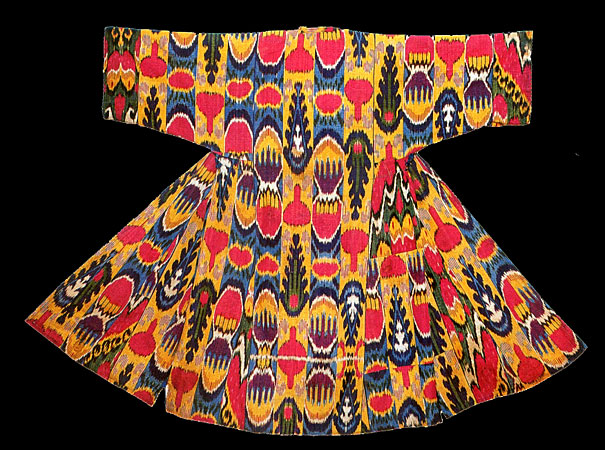
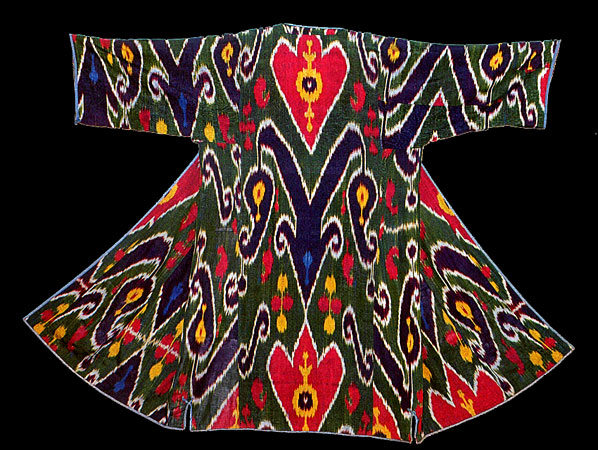
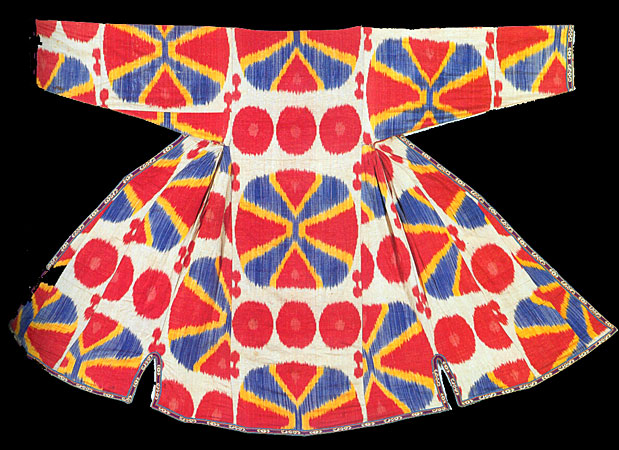
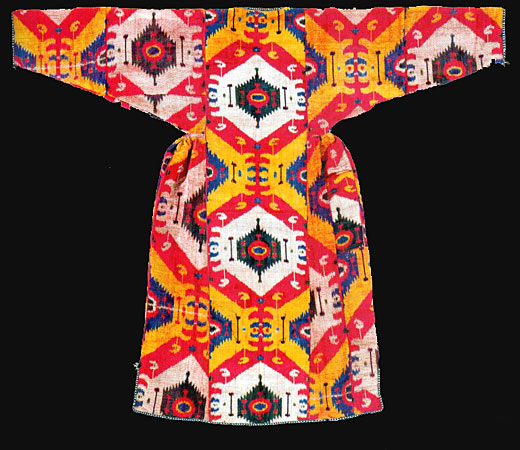
During the 19 Century Uzbeks, and Tajiks wove silk Ikats for robe like outer garments, called Chapan or Chirpi. They used tie dyed warps which tend to produce a vertical smearing of the design. Using an Ikat textile as a backing for a nice Suzani was a common practice.
Ikat patterns influenced the designs of some Turkoman rugs as well as Caucasian Kazaks.
For Ikat rugs in our inventory click here