Oriental Rugs Dictionary
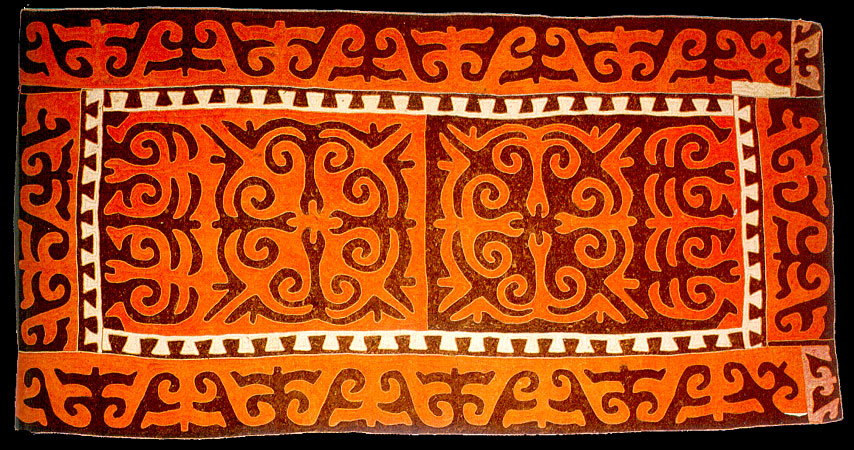
Felt Carpet
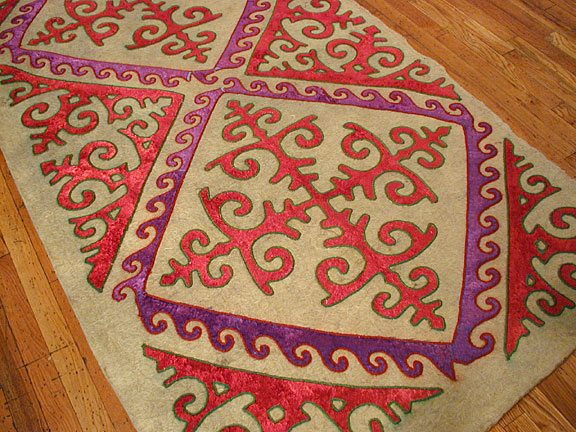
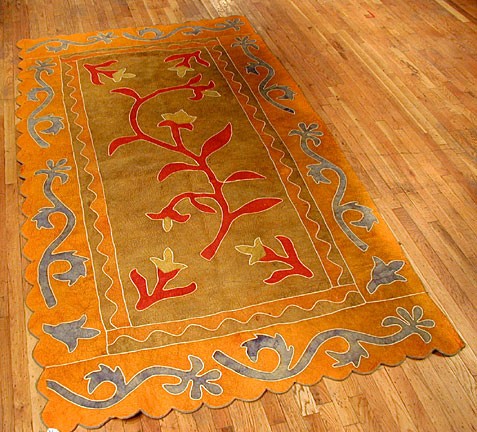
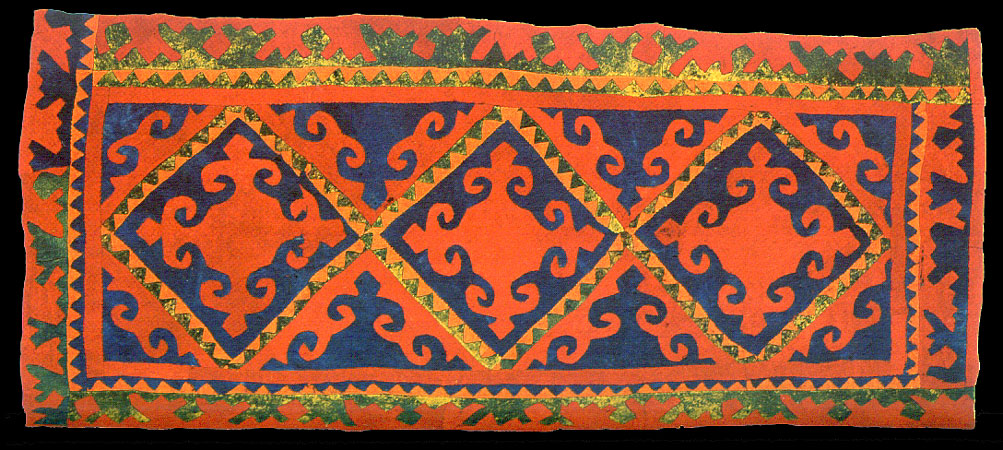
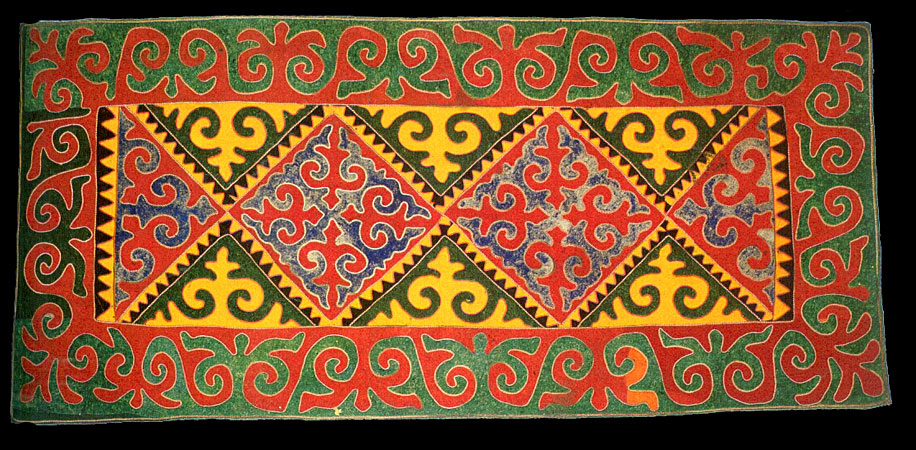
Felt carpets are textiles produced by matting and compressing wool fibers together rather than weaving them on a loom.
This technique has been used for centuries by nomadic cultures of Central Asia, where felt was used for floor coverings, tent insulation, and decorative textiles.
Although structurally different from knotted or woven carpets, felt carpets form an important part of the textile traditions of Central Asian nomadic peoples.
The basic structure of Turkoman nomadic tribe's tents structure consisted of a trellis of cane, sapling, or heart wood, a series of roof poles to support the felt flaps. The felt, usually a whiteish grey when new, was made by the women, who laid layers of combed wools between cane mats, soaked it with water and rolled it, repeating the process until the wool finally felted together. The process somehow resembles the process of Japanese Sushi roles preparation in a much larger scale.
This process was also adapted by some tribes to create rugs with designs in different colors.