Oriental Rugs Dictionary
Avar
The earliest mention of the Avars in European history at their current location is from Priscus who declares that in 463 AD. Throughout their history they maintained their heritage and mixed with the local ethnic tribes as well.
By 1801, they voluntarily submitted to Russian authority. Yet the Russian administration disappointed and embittered freedom-loving highlanders. The institution of heavy taxation, coupled with the expropriation of estates and the construction of fortresses, electrified the Avar population into rise.
The Caucasian War raged until 1864, when the Avarian Khanate was abolished and the Avarian District was instituted instead. One portion of the Avars refused to collaborate with Russians and migrated to Turkey, where their descendants live to this day. Although the population was decimated through war and emigration, the Avars retained their position as the dominant ethnic group in Dagestan during the Soviet period. After World War II, many Avars left the barren highlands for the fertile plains closer to the Caspian shore.
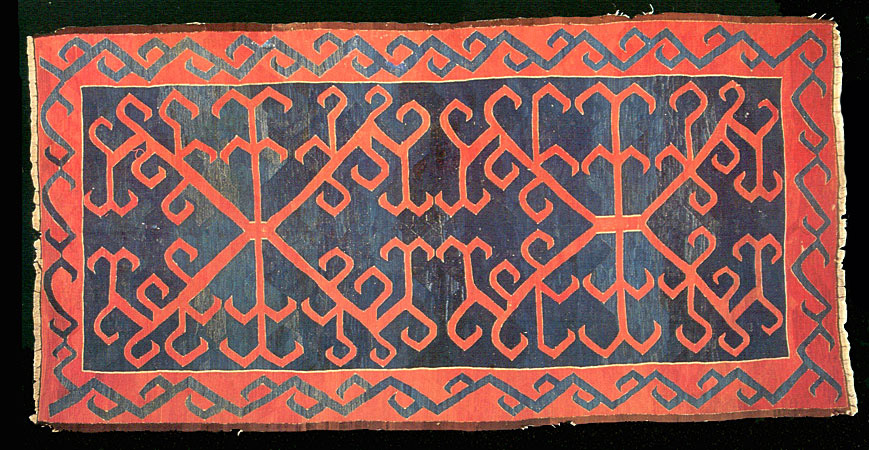
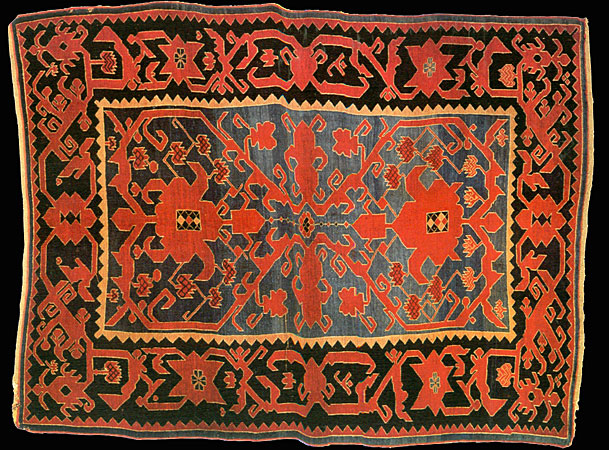
The symboles used in the Avar textile and rug weavings are all derived from the old Avarian symboles carved in stones and other artworks.
Avar rugs are associated with the Avar people of Dagestan in the Caucasus region. These carpets belong to the broader Caucasian weaving tradition and share many characteristics with Lesghi and Daghestan rugs.
Avar rugs typically display bold geometric patterns, stylized tribal motifs, and strong color contrasts. Like many Caucasian carpets, they are admired for their dynamic designs and durable construction.
For Avar rugs in our inventory click here