Oriental Rugs Dictionary
Sultanabad (Sultan Abad, Soltan Abad)
Sultanabad (now known as Arak) was a small town in central Persia, which has had a flourishing carpet-weaving industry since the nineteenth century. The production was entirely commercial and was stimulated by the activities of Tabriz merchants in the export markets. Being the administrative capital of the region, Sultanabad turned to be the export center of the region. The appearance of Ziegler & Co. in 1882 drastically changed the town's activity. Zigler's Co., which initially was involved in export of goods, such as opium and dried fruit products, decided to initiate a supervised carpet production, to suit the demands of the western markets.
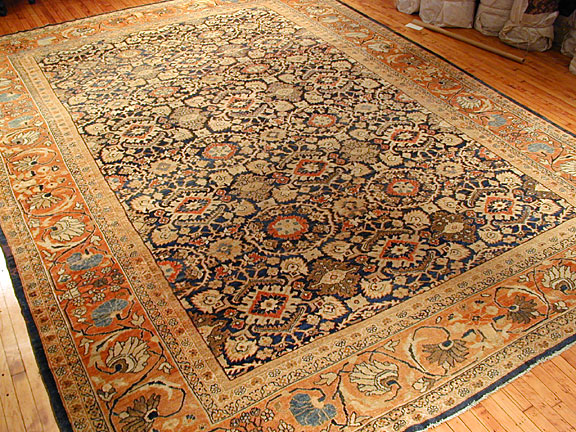
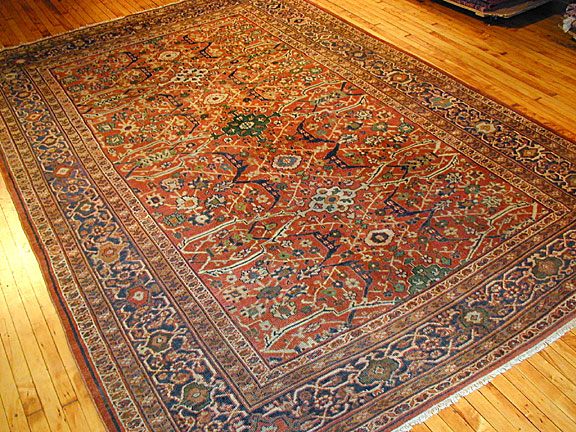
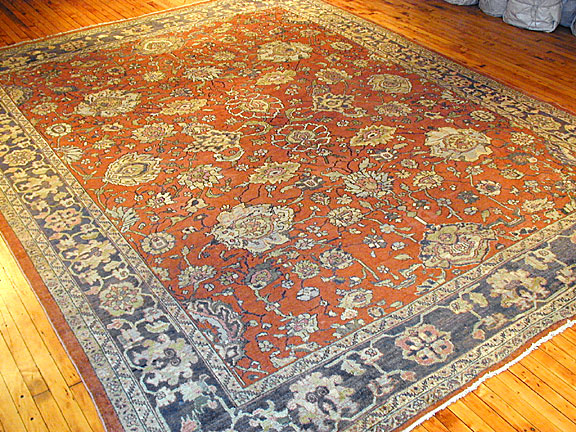
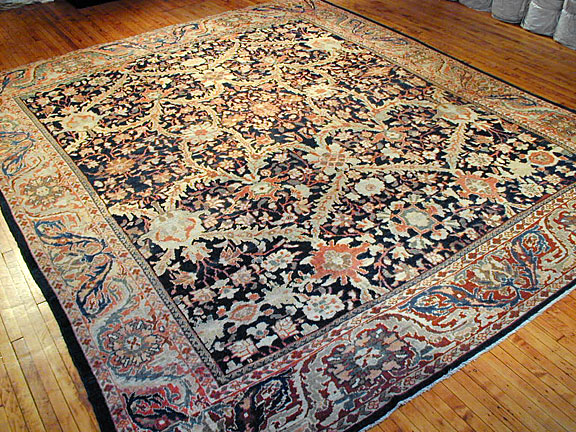
The industry was home based, employing weavers both in the town and surrounding villages. Carpets woven under the aegis of Zigler Company had designs based on small repeating floral patterns of Persian origin as well as all-over, large scale, lattice vine patterns surrounded by wide borders. The whole production was completely supervised, including import of wool, cartoon designs and even cotton yarn production for the foundation of the carpets. The carpets were made in many cases wider than the traditional room size, creating more "squarish" sizes, based on the demand of the export markets. The companies maintained their premises in Sultanabad until the late 1920's.
Arak is a city in central Iran that became an important carpet-weaving center during the 19th century. The region is closely associated with the production of Sultanabad and Mahal carpets, which were widely exported to Europe and America.
Carpets from the Arak region are known for their large-scale floral designs, spacious layouts, and soft color palettes, making them particularly suitable for Western interiors.
The weaving traditions of Arak played a significant role in the development of Persian carpets produced for international markets.